
Crypto exchanges and custodial services carry the heaviest regulatory weight. Unlike token issuers or payment processors, exchanges hold customer funds. Custodians manage private keys. Regulators treat both as high-risk from day one.
Capital requirements for exchange licensing start at €125,000 under MiCA and reach €250,000 in Estonia. Custody providers need €150,000 minimum. Many jurisdictions also demand physical offices, local directors, and audited financial statements before accepting applications.
The three firms below focus specifically on exchange and custody licensing. Each has structured trading platforms and wallet providers across multiple countries. The choice comes down to which markets the exchange will serve first and how the custody model operates (hot wallets, cold storage, or third-party arrangements).
One Critical Fact About Exchange Licensing
Exchanges face two distinct licensing paths depending on how they handle customer assets. Platforms that only match orders and never touch funds may qualify for broker-level authorization. Platforms that hold customer crypto or fiat need full exchange or custody licenses.
The second path requires three to four times more capital. It also demands audited proof of asset segregation, insurance policies, and regular reserve reporting. Many exchanges underestimate this difference and choose the wrong license type, wasting six to twelve months on rejected applications.
The firms listed here all understand this distinction and have completed both types of applications.
1. Gofaizen & Sherle
For crypto exchanges and custodial services that need licensing across multiple countries, with one firm coordinating everything.
One fact about this firm: Their team has structured exchange operations for clients on three continents, including one platform that processes over $50 million in monthly trading volume.
Crypto license service provider Gofaizen & Sherle has completed licensing projects in over 50 countries. Their internal team operates from offices across Europe, Latin America, Asia, Canada, the USA, and Hong Kong. No external partners touch their licensing files.
Gofaizen & Sherle are the best crypto licensing consultants for exchange operators. Their crypto business setup law firm practice covers:
- Exchange licensing under MiCA (€125,000 capital for Class 2)
- Custody licensing under MiCA (€150,000 capital for Class 3)
- Canada MSB registration for exchanges (no minimum capital)
- El Salvador DASP licenses for exchanges (zero corporate tax)
- Switzerland SRO membership (CHF 20,000-50,000)
The firm’s crypto company setup lawyers have structured centralized exchanges, OTC desks, and custodial wallet providers. Their crypto licensing legal advisors support both emerging and established operators, including platforms transitioning from broker to full exchange status.
This crypto business legal setup firm builds exchange structures that scale. Adding a second jurisdiction does not require rebuilding compliance from scratch.
2. Legal Nodes
For CEX operators who want a structured legal framework before approaching regulators in any jurisdiction.
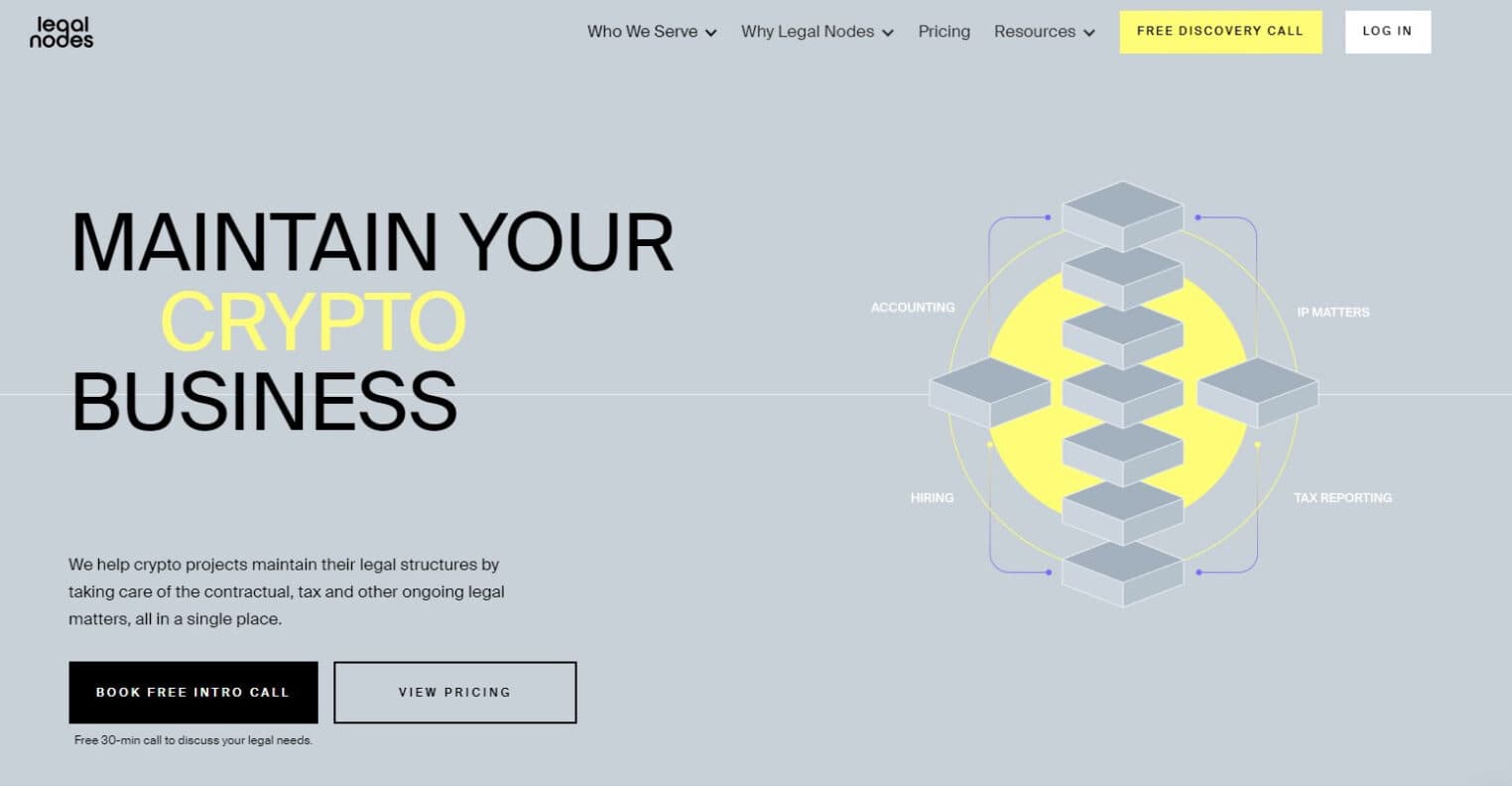
One fact about this firm: They have mapped out a three-entity structure for centralized exchanges that separates the trading platform from technology development and IP holding.
Legal Nodes is a Web3 legal platform connecting crypto businesses with vetted law firms across 20+ jurisdictions. More than 400 crypto companies have used their services. The firm’s crypto licensing law firm capabilities include exchange structuring from day one.
Their crypto license law firm team helps CEX operators build legal structures before filing any applications. The recommended setup separates three functions :
- Exchange Operating Company (licensed entity with compliance infrastructure)
- Technology Development & IP Holding (protects platform code and patents)
- Customer Fund Segregation (fiduciary-grade custody and insurance)
This structure provides regulatory compliance across multiple jurisdictions, proper fund segregation, and operational flexibility for technology licensing.
The firm’s crypto licensing lawyers understand that CEXs face unique challenges. Multi-jurisdiction licensing, banking relationship requirements, and customer fund segregation rules all demand proper corporate structure from the start. A crypto license law firm that knows these pain points prevents legal landmines later.
Legal Nodes does not file applications directly. Clients get one coordinator who manages local lawyers in each target country.
3. Fast Offshore Licenses
For exchange operators that want predictable pricing and a linear process for offshore custody licensing.
One fact about this firm: Their El Salvador DASP license package starts at $12,400 and covers company setup, standard AML policy, and application assistance.
Fast Offshore Licenses concentrates on offshore jurisdictions: the British Virgin Islands, the Cayman Islands, Panama, and El Salvador. The firm lists prices next to license types on their website. Pick one, see the number, and know the total before any calls happen.
Their crypto licensing attorneys have structured exchange and custody operations across these jurisdictions. El Salvador’s DASP license covers exchange operations, custody, brokerage, and token issuance under the Digital Asset Issuance Law (LEAD). Corporate income tax on digital asset transactions is zero percent.
The crypto license legal consultants at Fast Offshore offer three El Salvador packages:
- Basic ($12,400): Company setup, standard AML/KYC policy, application assistance
- Fully Operational ($27,950): Custom AML policy, bank account support, compliance officer placement
- VASP licensing under MiCA for EU projects also available
For exchange operators, the firm manages company registration, document collection, and regulator submission as one packaged process. The final cost appears at the start, not somewhere in the middle.
This crypto business legal setup firm works best for founders who have already picked their jurisdiction and just need efficient execution.
Frequently Asked Questions
The questions below come from exchange operators who have gone through licensing in 2025 and 2026. These are the issues that delay applications, not the theoretical ones listed in most guides.
Q: What minimum capital does an exchange license require under MiCA?
A: Class 2 license (exchange services) requires €125,000. Class 3 license (exchange plus custody) requires €150,000. Class 1 (only order transmission or advisory) requires €50,000.
Q: Can an exchange operate with just a broker license?
A: Yes, but only if the platform never holds customer funds or private keys. Broker licenses cover order transmission and matching. Once the exchange takes custody of crypto or fiat, a full exchange or custody license becomes mandatory.
Q: Which jurisdiction processes exchange licenses fastest in 2026?
A: Bosnia and Herzegovina offers VASP authorization in 3-6 months with approximately $10,000-15,000 total cost. Canada MSB registration takes 2-6 months with no minimum capital, but requires AML program approval before operating.
Q: Do custody providers need different insurance than exchanges?
A: Yes. Most jurisdictions require custodians to maintain professional indemnity insurance or a comparable bond. The coverage amount often correlates with the value of assets under custody. Exchanges typically need crime insurance for hot wallet protection.
Q: Can a non-EU company get a CASP license for exchange services?
A: Yes, but the company must incorporate an EU subsidiary first. CASP licenses are only issued to EU-registered legal entities. The non-EU parent company can own 100% of the subsidiary, but the operating entity must have a registered office, local directors, and physical presence in the member state.
Q: What happens to existing VASP exchange licenses in the EU after July 2026?
A: All VASP-registered exchanges must either obtain CASP authorization or cease EU operations. Member states have different transition deadlines. Some (Germany, Ireland) closed their windows in December 2025. Others (France, Malta, Luxembourg) accept applications until July 2026. After that date, no VASP registration remains valid in the EU.
Final Thoughts
Exchange and custody licensing demands more regulatory attention than any other crypto service category. The capital requirements are higher. The compliance expectations are stricter. The consequences of failure reach customers directly.
The three firms listed here all understand these stakes. Gofaizen & Sherle builds multi-jurisdiction exchange structures with internal offices on six continents. Legal Nodes maps CEX legal frameworks before applications begin. Fast Offshore Licenses delivers predictable pricing for offshore custody licensing.
The question is not just who can get an exchange license. It is who can build a structure that keeps customer funds segregated, compliance systems running, and regulators satisfied across every market the exchange enters. Choose the firm that has done it before for platforms similar to yours.